Cornerstone · Heat pumps
Are heat pumps worth it in the UK?
The honest 2026 answer, broken down by your house, your current boiler, and what you'd actually have to spend.
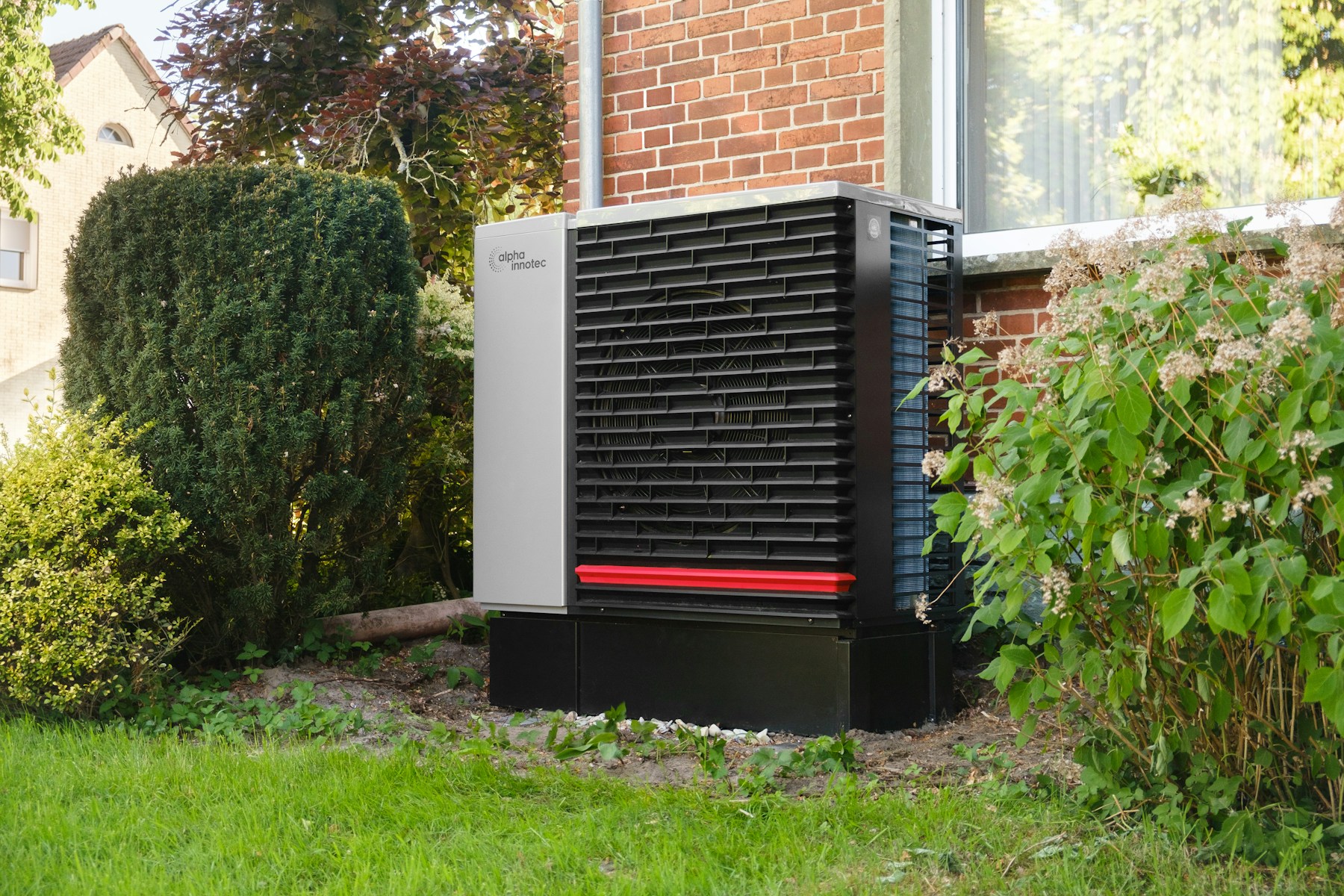
For most reasonably-insulated UK homes, yes. An air source heat pump fitted under the Boiler Upgrade Scheme costs roughly £4,500 to £10,500 after the grant for a typical 3-bed semi.1,2 Running cost is similar to a gas boiler on a standard tariff, and noticeably cheaper on a heat-pump-specific tariff.
For badly-insulated homes, sort the insulation first. A heat pump fitted to a leaky house will cost more to run than the boiler it replaced, not less. The single best question to ask before getting a heat pump quote is: has someone done a proper heat-loss survey of this house?
"Are heat pumps worth it?" is one of the most-asked retrofit questions in the UK, and most articles answer it badly. You get either "yes, save the planet!" or "no, my brother-in-law's was a disaster." Both miss the point. The honest answer depends on three things: your house, your current heating system, and how you'd actually pay for the install. This guide walks through each one.
How much does a heat pump cost in 2026 (with the grant)?
The Boiler Upgrade Scheme (BUS) takes £7,500 off both air source and ground source heat pump installations in England and Wales.3 The grant goes to your installer, who deducts it from your invoice. You don't pay upfront and claim back.
Post-grant, what you'd typically pay for installation on an existing 3-bed semi:
- Air source heat pump (ASHP): £4,500 to £10,500. Lower end is a straight swap with no radiator changes. Upper end includes radiator upsizing in a few rooms and a new hot water cylinder.2
- Ground source heat pump (GSHP): £14,000 to £32,000. The wide range comes from borehole drilling, which is the biggest cost variable. Cheaper if you have a large garden suitable for horizontal trenches; expensive if you need a deep borehole.2
Scotland has its own scheme (the Home Energy Scotland Grant and Loan), with up to £7,500 grant plus a £7,500 interest-free loan. Northern Ireland has no equivalent national grant as of May 2026.4,5
Will it actually save me money?
The honest answer: maybe, depending on the tariff. The maths depends on running cost per unit of heat delivered, not cost per unit of fuel.
A heat pump's efficiency is measured by its seasonal performance factor (SPF). For every 1 kWh of electricity it draws, a properly-installed modern ASHP delivers about 3 kWh of heat (so SPF ≈ 3). A gas boiler delivers about 0.92 kWh of heat per kWh of gas, or 90 to 92% efficient.
On the May 2026 Ofgem price cap (gas around 6p per kWh, electricity around 24p per kWh) that works out to roughly:6
So how do heat-pump owners actually save? Two reasons.
Heat-pump-specific tariffs. Octopus Cosy and similar tariffs price electricity at around 12p per kWh in three off-peak slots per day, which is when a heat pump can do most of its work. With a Cosy-style tariff and decent timing, the effective cost per kWh of heat drops to roughly 4p, which is comfortably cheaper than gas.7
Better controls. Heat pumps run continuously at low flow temperatures. That uses less energy than blasting a gas boiler hot for two hours twice a day. The total annual heat delivered is often lower with a heat pump even though the house feels warmer.
Does my house need expensive insulation first?
Possibly. The biggest mistake homeowners make is fitting a heat pump to a house that's losing heat too fast for the heat pump to keep up at the lower flow temperatures it operates at. The result: the heat pump runs almost continuously, electricity bills go up, the house is cold on the worst nights, the homeowner blames the heat pump, and the press writes another "heat pumps don't work in Britain" story.
The threshold most installers use, roughly: cavity walls (insulated), reasonable loft insulation (270mm or more), and double glazing. If your house has those, an ASHP will work. If your walls are solid and uninsulated, or your loft is half-insulated or vented directly to the eaves, you need to fix that first.8
The MCS heat-loss survey your installer is required to do for the grant will quantify this for your specific house. If the result is that you'd need a 16 kW heat pump to keep up, the maths doesn't work for the grant or the running cost.
Will a heat pump work in cold weather?
Yes, if it's the right size for your house. Modern air source units are rated to keep working down to about minus 20C. Their efficiency drops as it gets colder, so a properly-sized system is sized for your house's coldest realistic day (typically minus 3C in much of the UK; colder in Scotland), not the average winter day. UK winter lows almost never reach the operating limit.
Where heat pumps struggle is when an undersized unit is fitted to keep grant costs down. These are the systems people complain about. The fix is correct sizing in the first place, which the MCS heat-loss survey enforces.
Do I need to replace my radiators?
Sometimes. Because a heat pump operates at lower flow temperatures (typically 35 to 45C versus a gas boiler's 60 to 75C), a radiator emits less heat for the same surface area. To deliver the same amount of heat to the room, the radiator may need to be larger.
In practice, about half of UK installs require some radiator upsizing, usually only in the rooms with the worst current heat output (often the kitchen and bathroom). A full house re-rad is rare and would push the install price toward the higher end of the range above. The heat-loss survey identifies which rooms need attention.8
What about hot water?
A heat pump heats hot water as well as heating the house, but does it differently. Most installs include a new hot water cylinder, typically 200 to 300 litres, which the heat pump heats to around 50C. A separate immersion element brings the cylinder up to 60 to 65C once a week to kill any Legionella bacteria.9
If your current home is a combi (no cylinder), you'll need to find space for one. Often that's the airing cupboard, sometimes a redundant chimney breast. This is a real install consideration, not just a cost one. Flats with no cylinder space and no airing cupboard often can't have a heat pump at all.
Are gas boilers being banned?
Not in existing homes. The 2035 proposed ban on replacement gas boilers in existing homes was scrapped in September 2023 by the government of the day, and has not been reinstated as of May 2026.10
What has happened: from June 2025 the Future Homes Standard banned the use of gas-fired heating in new-build homes. In practice that means almost all new-builds get a heat pump from mid-2025 onward.11
If you have a gas boiler today, you can keep replacing it indefinitely. If you're choosing now, it's worth knowing the trend is one-way. Grants for heat pumps go up. Gas connection costs are already going up faster than electricity. Resale buyers in 2030 and beyond will increasingly view a 25-year-old gas boiler as a negative on the property listing.
Will it lose me money if I sell?
The honest answer is that we don't really know yet. The 2026 evidence is limited because the heat-pump-installed property market is small and selection-biased (heat-pump owners tend to keep the house longer). The Energy Saving Trust's view is that an A-rated EPC, which a heat pump install typically helps you achieve, adds about 4% to a typical UK property value. That's enough to recoup most of the upfront cost on resale alone, separate from any running-cost savings.12
Caveat: this is averages, and depends on local market norms. In a conservative semi-rural market a visible outdoor heat pump unit may be a wash. In an urban energy-conscious market it's likely a net positive.
So, should you get one?
Decision rule from this site, based on the figures above:
- Yes, if your house has cavity-wall (or equivalent) insulation, decent loft insulation, double glazing, and you'd otherwise be spending £3,000 to £4,000 on a like-for-like new gas boiler in the next few years. The post-grant cost difference is £1,500 to £6,500 for a 15 to 20 year asset that lowers your running cost and increases your house value.
- Maybe, if your house has good insulation but you've got a relatively new (under 10 years old) gas boiler that works fine. Sit on the gas boiler for now. The heat pump proposition gets stronger every year as gas prices rise faster than electricity.
- Insulate first, if your house has solid walls (most UK homes built before 1930), single-glazed windows, or uninsulated lofts. The grant exists for the heat pump but the biggest savings (and the only way the heat pump runs cheaply) come from insulating first. The Great British Insulation Scheme and ECO4 cover some of this for eligible households.13
- Probably no, if you live in a flat with no space for a hot water cylinder, no outdoor space for the unit, or no consent from the freeholder. Hybrid air-to-air systems exist but the grant doesn't cover them.
The next step for any of the "yes" or "maybe" houses is the same: get a heat-loss survey done by an MCS-certified installer (most offer one for free as part of a quote). The numbers in that survey are what tell you whether the maths works for your specific house, not for an average semi in an article.
Quick check
Should you get a heat pump for your house?
Five questions about your home. We'll give you the same answer the article above gives, but for your specific situation.
This is a guide to whether the article's recommendation applies to your house. It is not a heat-loss survey. If the answer is "yes" or "maybe", get an MCS-certified installer to do a proper heat-loss survey before committing.
Sources
- Department for Energy Security and Net Zero, Boiler Upgrade Scheme, gov.uk, accessed May 2026. gov.uk/apply-boiler-upgrade-scheme
- Energy Saving Trust, Heat pumps: how much they cost and will save, accessed May 2026. energysavingtrust.org.uk
- DESNZ, Boiler Upgrade Scheme grant value increased to £7,500, October 2023 announcement, gov.uk. gov.uk/government/news
- Home Energy Scotland, Grants and loans, accessed May 2026. homeenergyscotland.org
- NI Direct, Energy efficiency grants and schemes, accessed May 2026. nidirect.gov.uk
- Ofgem, Energy price cap, current rates, accessed May 2026. ofgem.gov.uk
- Octopus Energy, Cosy Octopus tariff details, accessed May 2026. octopus.energy/smart/cosy-octopus
- MCS, MIS 3005 Heat Pump installation standard, accessed May 2026. mcscertified.com
- NHS / HSE guidance on Legionella in domestic hot water systems, referenced via UK building regulations Part L. gov.uk Approved Document L
- BBC News, Rishi Sunak delays petrol car ban and weakens green policies, 20 September 2023 (covering the 2035 boiler ban scrapping). bbc.co.uk/news/uk-66874790
- DESNZ, Future Homes Standard, technical consultation response, accessed May 2026. gov.uk Future Homes Standard
- Energy Saving Trust / Knight Frank joint research, EPC rating impact on UK property values, 2024. energysavingtrust.org.uk
- Ofgem / DESNZ, Great British Insulation Scheme and ECO4 eligibility, accessed May 2026. ofgem.gov.uk/great-british-insulation-scheme